
9 Quiet Hobbies for Women Who Are Done Being Overstimulated
- Heather Drewett
- May 25
- 5 min read

Okay, let's be real about what "wellness hobbies" actually means here - because I'm not talking about a 5am cold plunge and a green smoothie.
I'm talking about the quiet kind of wellness. The kind where your nervous system actually unclenches for five minutes.
The kind I desperately needed after a season of my life where I was constantly online, constantly reacting, and somehow still bored out of my mind.
These are the hobbies that pulled me back. I hope they do the same for you.
Journaling
What kind of journaling is actually good for anxiety and overthinking?
Not the color-coded, sticker-tab, 47-tracker bullet journal system you saw on Pinterest - that stuff stressed me out more than it helped me.
I mean just writing. A cheap notebook, a pen that feels good in your hand, and maybe a candle if you're feeling fancy.
I started doing morning pages after a period where the first thing I did every single day was check my phone before I was even fully awake.
My nervous system was wired before I'd had a single sip of coffee.
Writing three messy, unfiltered pages every morning genuinely changed how I moved through my days.
It's not magic. It's just giving your brain somewhere to put everything before the world starts demanding things from you.
Brain dumps, gratitude lists, letters you'll never send - whatever gets it out of your head and onto paper.
Reading
Does reading physical books actually help with screen fatigue?
This is a hill I will absolutely die on, and I will not apologize for it.
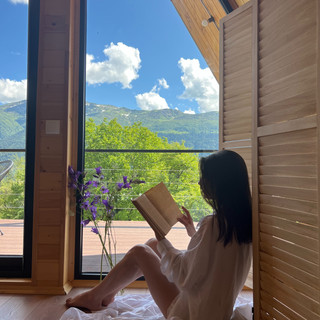
There is something your brain is deeply craving when it picks up an actual book - the texture of the pages, the weight of it, the complete absence of a notification every three minutes pulling your attention sideways.
I did an experiment last year where I swapped 20 minutes of pre-sleep scrolling for reading a physical book instead.
Within two weeks my sleep was noticeably better.
Not perfect, but better.
Start with something slow and cozy - not a thriller that'll keep you up until 2am, and maybe not the self-improvement book that makes you feel behind.
Something with atmosphere.
Something with no urgency.
Cooking
Can cooking at home be a form of stress relief or mindfulness?
Yes, but only when you stop treating it like a task on your to-do list and start treating it like a ritual.
I learned this by accident.
I was making soup on a rainy Sunday with a good playlist on, taking my time with every step, not rushing to get it done - and I realized I'd been fully present for like an hour without even noticing.
That almost never happens to me.
The sensory experience of slow cooking - the smell of garlic hitting a pan, the way bread sounds when you're kneading it, the rhythm of chopping - is genuinely meditative if you let it be.
Big pots of soup, homemade bread, slow-simmered sauces. It doesn't require any particular skill.
It just requires putting your phone in another room and deciding this is the thing you're doing right now.
Walking
What happens to your brain when you walk without your phone or podcasts?
I know. The idea sounds uncomfortable. I was the person who couldn't take out the trash without putting something in my ears first.
The thought of walking in actual silence felt almost aggressive.
And then I tried it - just ten minutes around my neighborhood with no audio, no phone, no agenda - and it was one of the more quietly revolutionary things I've done for my mental state. Your mind wanders. Problems untangle themselves. You notice your street in a completely different way. Your brain finally gets the unstructured time it's been begging for. Start with ten minutes. You don't have to go far. You just have to go without the content.
White Space
How do you create a calming space at home when you don't have a lot of room?
This doesn't require a Pinterest-perfect reading nook or a whole room dedicated to peace.
It requires one corner. One chair.
A lamp with warm light and maybe a blanket that feels nice. I carved out a tiny spot in my home - a chair by the window with a small side table for tea - and declared it a no-screens zone.
Something shifts when your body has a physical place it associates with rest.
You sit down there and your nervous system actually gets the memo: this is where we decompress. It sounds almost too simple to work. It works.
Get lost in art
Is drawing or doodling good for anxiety if you're not artistic at all?
Genuinely one of the best things I've tried, and I want to be extremely clear: I am not good at drawing. I have never been good at drawing. That is not the point.
The point is that when your hands are doing something, your brain goes quiet in this specific way it doesn't do with anything else.
Even just doodling in the margins of a notebook while you're thinking pulls you into the present moment more completely than almost any other activity.
There's no social media algorithm to optimize for.
There's no performance. It's just you and a pen and ten minutes before bed instead of your phone.
Buy a houseplant
What are the benefits of having houseplants for mental health and stress?
I used to roll my eyes at this one. Then I got a single pothos during a particularly bad stretch of anxiety, and I understood immediately. There's something grounding about caring for something living that isn't yourself or another person pulling on your attention.
It's small, it's quiet, and it asks almost nothing from you.
I now have an embarrassing number of plants and a windowsill herb garden I'm disproportionately proud of. (I also killed a cactus once, so I'm not here to judge anyone.)
Watching things grow - slowly, on their own timeline, without your intervention - is a surprisingly good reminder that not everything needs to be urgent.
Music and Sound
How does what you listen to affect your mood and stress levels throughout the day?
More than almost anything else, honestly. I spent a long time running on a daily diet of true crime podcasts and high-energy playlists, and I wondered why I felt vaguely keyed-up even on easy days.
The audio environment you create is like the background radiation of your mood - you stop noticing it, but it's always shaping how you feel.
Swapping into lo-fi, jazz, classical, or nature sounds while I work or clean or cook changed the entire texture of my days. Think of it as interior design for your nervous system.
You'd never put a strobe light in your living room and wonder why you couldn't relax.
Reduce digital reliance
What's the most effective way to actually reduce social media use without quitting entirely?
Not willpower. Willpower doesn't work here because the apps are specifically designed to defeat it. What works is structure - actual windows of time when you check social media, and actual dead zones when you don't.
I set two specific times a day to open any social app, and I stuck to it structurally (app limits, not just intentions). Outside of those windows, my phone stopped being a slot machine I pull on unconsciously.
It took about a week to stop reaching for it reflexively, and then it started feeling genuinely freeing.
This single shift opened up more mental space than almost anything else on this list - and I mean that.
The thread connecting all of these?
They're slow. They require your actual presence.
They give you back a little pocket of quiet in a world that is relentlessly, exhaustingly loud.
You don't have to do all of them. Pick one. Start there this week.
Which one are you trying first? Drop it in the comments I genuinely read every single one.


Comments