
From Doomscroll to Page-Turner: The Practical Magic of Building Your Analog Infrastructure
- Heather Drewett
- May 31
- 10 min read
Updated: Jun 4

Let me say the quiet part out loud right at the start, because I think you need to hear it before we go any further:
The problem isn't your willpower. It's that your analog life isn't as easy, shiny, or inviting as your digital one.
That's it. That's the whole diagnosis, and it's not your fault.
Your phone is a multi-billion-dollar product engineered by rooms full of the smartest people on earth to be irresistible, frictionless, and infinitely rewarding.
It is designed to win.
And what's it competing against?
A book that's somewhere, probably under a pile of mail.
A journal you keep meaning to start.
A hobby you sort of want to pick up when things slow down.
Things slow down, by the way, very rarely.
So you scroll. Of course you scroll.
The scroll is right there, it's easy, and it delivers that little hit of novelty your brain is constantly hunting for.
You are not weak.
You are just operating in an environment that isn't set up to help you.
That's what we're going to fix today.
Not by going cold turkey.
Not by deleting apps and feeling virtuous for three days before reinstalling everything.
But by building something - physically, tangibly, deliberately - that actually competes with the digital world on its own terms.
Something beautiful and easy and rewarding enough that reaching for it becomes the new default.
I'm talking about your analog infrastructure. Let's build it.
What Even Is "Analog Infrastructure"?
I came up with this term sitting on my kitchen floor at 11pm, having just spent forty minutes doing absolutely nothing productive on my phone when I had genuinely intended to read.
I was annoyed at myself, and then I stopped being annoyed at myself and got curious instead.
Why did I pick up my phone?
Because it was there, charged, bright, and required zero activation energy.
Why didn't I read?
Because my book was in the other room, I wasn't sure if my reading glasses were nearby, and my reading chair had a sweater on it.
The analog life lost not because it was worse, but because it had more friction.
Infrastructure, in the literal sense, is the underlying system that makes everything else work. Roads, pipes, power lines - the invisible scaffolding that lets you live your life without thinking too hard about it.
Your analog infrastructure is the same idea: the physical objects, the curated spaces, the small rituals that make the offline life not just possible, but the path of least resistance.
The default. The easy choice.
When I started building mine intentionally, things shifted in a way that years of self-discipline hadn't managed.
And I'm not a particularly disciplined person, which I think is actually useful context for everything that follows.
Infrastructure Category 1: The Attention Altars
This is my favorite phrase and I'm not sorry about it.
An attention altar is any small, carefully considered physical setup that says: come here, sit down, be a person for a while.
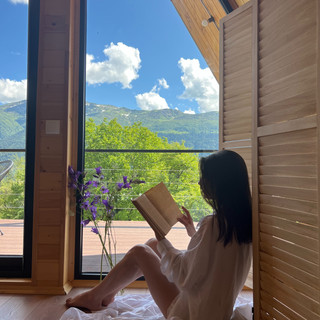
The Always-There Book
Here is the single highest-impact thing I have ever done for my reading life: I stopped having a book, and started having books everywhere.
One on the nightstand, obviously.
One on the kitchen counter for when I'm waiting for water to boil (this alone added probably twenty minutes of reading a day to my life).
One in my bag. One on the coffee table - and crucially, not under anything.
Visible. Accessible. Inviting.
The book on the coffee table is key.
It needs to be good - something with a pull, not something you feel like you should read.
This isn't the moment for improving yourself.
This is the moment for competing with Instagram, which means you need something genuinely captivating.
A thriller. A memoir that reads like a novel.
Something with short chapters so you feel the satisfaction of finishing something in seven minutes flat.
I have a rule for myself: when I finish a book, I immediately figure out what goes in its spot.
There's no gap. The infrastructure doesn't go dark.
One more thing - and this might sound fussy but I promise it isn't - the book should be something you like.
And a nice bookmark.
Maybe one of those little reading lights that clip on.
Nothing elaborate, just pleasant enough that reaching for it feels like a small treat rather than homework.
The Audio Oasis
I want to talk about the podcast and album setup because I think people underestimate how much the pre-curating matters.
Here's what doesn't work: feeling the urge to scroll, resisting it, picking up your headphones, opening an app, trying to decide what to listen to, getting overwhelmed, putting the headphones down, scrolling.
Here's what does work: having something already queued, headphones already on the hook by your cozy chair, knowing that if you sit there and press play, something good will immediately happen.
The difference is about five seconds of friction, and those five seconds are everything.
My system - and I recognize this sounds extra but it genuinely helps - is that I spend about ten minutes on Sunday making sure I have things ready.
A podcast series I'm in the middle of.
An album I've been meaning to actually listen to all the way through instead of shuffling.
An audiobook for the long drives. These are loaded, queued, and waiting.
And the cozy spot matters.
This doesn't have to be elaborate.
Mine is literally just a specific chair with a specific blanket and a lamp that has warmer light than the overhead.
But my nervous system now associates that chair with good things that aren't my phone, and that association is worth more than any app blocker I've ever tried.
Set up your audio oasis before you need it. Future you will be so relieved.
Infrastructure Category 2: The Hands-On Hobbies
There's something specific that happens when your hands are busy that deserves its own conversation, because I think it's the most underrated piece of this whole puzzle.
Scrolling is a hands-and-eyes activity.
When your hands have something else to do - something tactile, something that requires small motor skills and a sliver of attention - your brain stops hunting for the phone.
Not because you have incredible willpower, but because the itch is being scratched another way.
This is why knitting is having a moment. Why adult coloring books were a thing.
Why people got really into puzzles during the pandemic and realized they actually liked them.
The hands-on hobby isn't a retreat into childhood - it's a neurologically sound strategy for giving your brain the stimulation it's craving without feeding the machine.
The Fiddle Box
I want you to think about building what I call a fiddle box.
This is exactly what it sounds like: a small container or basket with things to fiddle with.
The contents depend entirely on you.
Mine has: a small sketchbook and a few nice pens (I am not good at drawing, this is not the point), a little loom for finger weaving that I bought for seven dollars and find deeply soothing, a deck of cards, and sometimes a miniature puzzle - the kind with 100 pieces that you can finish in a sitting.
The fiddle box lives where I watch TV, because that's when I'm most likely to also be on my phone.
It's within arm's reach. It requires zero setup.
The bar to entry is so low it's basically underground.
The key is that this stuff needs to be genuinely accessible - not in a closet, not in a bag you have to dig through.
Right there. Easy.
A fiddle box tucked away is a fiddle box that never gets opened.
Think about what you'd actually reach for if it were right in front of you.
Crossword puzzles? A little crochet project?
A jigsaw puzzle that lives on the coffee table, perpetually in progress?
Some people love those tiny watercolor sets.
Some people like Lego - I know adults who keep a small set going on the corner of their desk and add a few pieces a day and find it genuinely meditative.
There's no wrong answer.
The Sunday Analog Project
This one changed something for me that I didn't expect.
Once a week - and it doesn't have to be Sunday, that's just when it works for me - I do something with a physical outcome.
Something I can see, hold, or eat when I'm done. Something that began and ended within the day.
Some weeks that's baking bread.
Some weeks it's potting a plant or doing something in the garden, even just pulling weeds for twenty minutes and rearranging some things.
Sometimes it's making a genuinely elaborate dinner.
Once I made a very bad bird feeder out of a pine cone and peanut butter and thought it was the greatest afternoon I'd had in months.
The phone doesn't help you bake bread. It can give you the recipe, and that's where its usefulness ends.
The rest is you, the dough, the smell of the kitchen, the tactile satisfaction of something that comes out right - or doesn't, which is also fine, you learn something and try again.
There's a whole loop of engagement there that the phone fundamentally cannot replicate because it never produces anything you can touch.
That physical outcome - whatever it is - does something psychologically that I find hard to articulate but easy to feel.
You made something.
You were here, in the room, doing a thing with your body.
That's worth protecting.
Infrastructure Category 3: The Social Scaffolding
Okay this is the section where I need you to trust me a little bit.
One of the sneakiest things about phone culture is that it's made passive entertainment the default social activity.
You hang out, you watch something, you scroll near each other.
And that's fine sometimes - I am not anti-couch, I love a good couch - but somewhere along the way we forgot how to suggest alternatives without it feeling like a big weird ask.
It isn't a big weird ask. I promise. People are starving for something different.
How to Propose an Analog Hangout
The language matters here.
Not "hey do you want to come over and like, not use our phones?" - that sounds like a hostage situation.
Instead, lead with the activity and the ease of it.
"I'll bring a board game, you bring snacks, we'll figure it out."
"I have a puzzle I've been wanting to start, come over, we can listen to music while we do it."
"I got a new recipe I want to try - come be my taste tester Saturday afternoon."
Notice what these have in common: they give the plan a shape.
There's something to do.
The other person knows what to expect.
Nobody has to perform or be interesting or bring their A-game - they just have to show up and have hands.
I started doing this with a few friends a couple of years ago and what happened was that these turned into the hangs I actually remember.
We were present.
We were talking while doing something, which is how humans have always communicated best - side by side, hands occupied, conversation flowing in and out of focus.
The old way, as it turns out.
The Phone Bowl Ritual
This is simple, low-pressure, and surprisingly effective.
Get a nice bowl - or a basket, or a little tray, something that looks intentional - and put it near your front door or the center of your table when people come over.
Don't announce it with a speech.
Just put your phone in it when you walk in, and see what happens.
What usually happens is: someone asks about it, you explain casually, they think it's kind of a cool idea, they put their phone in too.
And then you have a gathering where everyone is actually there.
I have a friend who does this without any explanation at all.
She just has the bowl.
New people come over, see the bowl, see phones in it, figure it out.
She says she's never had to ask anyone twice.
You can do it at home too - just for yourself.
Phone goes in the bowl when you get home.
You pick it up intentionally when you need it, rather than carrying it from room to room like a little anxiety stone.
The physical act of setting it down somewhere specific creates a small but real psychological boundary between you and it.
The Infrastructure Mindset: The Path of Least Resistance Is Built, Not Found
Here's the thing I want you to hold onto as we wrap up, because it's the heart of all of this:
You are not trying to deny yourself anything.
You are not punishing yourself for enjoying technology.
You are not becoming a person who lectures others about their screen time.
Please, never be that person.
What you are doing is building an environment where the good stuff is just as easy to reach as the scroll.
Where the book is right there, already open to your page.
Where the fiddle box is within arm's reach.
Where the chair and the blanket and the queued-up podcast are waiting.
Where your friends know that coming over means actually coming over.
You're not fighting your instincts - you're redirecting them toward things that actually fill you up rather than things that leave you feeling weirdly empty at 11pm wondering where the last two hours went.
The analog life isn't less convenient than the digital one. It just seems that way because we've spent years optimizing the digital and ignoring the analog.
That's all that's happening.
And it can be undone, one small physical choice at a time.
Start with one thing this week.
One book placed somewhere new. One fiddle box assembled. One bowl by the door. One Sunday project that makes something with your hands. Just one.
See how it feels to have something good already waiting for you.
And then, slowly, let it spread.
Now Your Turn - Show Me Your Infrastructure
I mean this: I want to see what you're building.
Share a photo of your reading nook, even if it's just a chair with a lamp and a stack of books. Show me your current craft project, however beginner or chaotic.
Tell me about your phone bowl - do you have one? Do you want one? What's the fiddle box item you'd actually reach for?
Most importantly: what's one piece of analog infrastructure you want to build this month?
A reading corner? A Sunday project ritual? A standing plan with a friend that gets you off the couch and into something real?
Drop it in the comments. Let's make a little pile of ideas together.
I find that knowing someone else is building something alongside you makes it about thirty percent easier to actually do the thing - and thirty percent is usually all you need.
The phone will still be there.
It's not going anywhere.
But for now, let's see what else we can make room for.


Comments