
Leaving the Feed: A Case for Digital Disconnection
- Heather Drewett
- May 31
- 5 min read
Updated: Jun 4
Your attention is the most valuable thing you own. Spend it like you know that.

What if the most radical thing you can do for your peace isn’t another meditation app, but deleting the app store entirely?
What if the quiet you’ve been chasing - the real kind, the deep-breath, shoulders-down, nobody-needs-anything-from-me kind - has been waiting for you on the other side of a notification setting you’ve been too afraid to turn off?
I want to talk about digital dissent.
Not the punishing, white-knuckled, I-deleted-Instagram-for-Lent kind.
And not the smug, phone-stacking-at-dinner kind either.
I mean the slow, intentional, almost-revolutionary act of deciding that your attention - your gorgeous, finite, irreplaceable attention - belongs to you.
And choosing to spend it accordingly.
I came to this slowly. I was never someone who declared a dramatic digital detox and announced it on social media (the irony of that never gets old).
It was more of a creeping awareness: I was spending hours a day on platforms that left me feeling subtly worse than when I started.
Not devastated. Just…diminished.
A little more restless.
A little more like I wasn’t enough, wasn’t doing enough, wasn’t documenting my life in a compelling enough way.
The algorithm had opinions about me, and I had started to believe them.
The Part That’s Worth Naming Out Loud
Here’s something I think deserves a gentle, honest conversation: the online world can be a particularly relentless place for women.
Not because we’re fragile - we are absolutely not - but because so much of what the algorithm surfaces for us is calibrated to make us feel like a project.
A before photo. A work in progress.
The “shoulds” pile up faster than laundry.
You should be eating cleaner, moving more, building a side income, documenting your mornings, having a skincare routine with seventeen steps, and - most exhaustingly - looking effortless while doing all of it.
The comparison isn’t always loud or obvious.
Often it’s just a low hum running under your day, so constant you stop registering it as noise.
There’s also the emotional labor of it all.
Staying informed.
Being engaged.
Having the right take at the right time.
Processing other people’s grief, outrage, and highlight reels simultaneously.
Women tend to absorb and carry a lot of that emotional weight without even realizing it’s happening - and the feed delivers it in an endless, unfiltered stream.
Choosing to step back from that isn’t opting out of life. It’s opting back into your own.
It’s Not a Detox. It’s an Upgrade.
Can we retire the word “detox”?
It implies you’ve been poisoned and need to purge.
It frames the whole thing as deprivation and recovery.
And honestly, that framing is part of why digital detoxes rarely stick - who wants to live in a permanent state of depriving themselves of something?
What if we called it what it actually is: analog abundance.
The gaining of something rather than the giving up of something.
Because here’s what’s waiting on the other side of less screen time, in my experience: books I actually finish.
Conversations where I’m not mentally composing a caption.
The specific quality of a Sunday morning that has nowhere to be and nothing to perform.
Handwritten letters that take twenty minutes to write and feel disproportionately meaningful to receive.
Creative ideas that have enough silence to surface.
Noticing things - a good cloud, a funny overheard sentence, the way the light changes in the late afternoon - without the immediate reflex to photograph them for someone else.
The thing nobody tells you about reclaiming your attention is how much you had forgotten was in there.
Your own thoughts.
Your own taste.
Your own pace.
A Menu of Dissent (Choose What Sounds Like Freedom)
I’m not going to hand you a rigid plan, because that’s not how any of this works.
What I will offer is a menu - a handful of experiments you can try on like clothes and see what fits.
The Phone-Free Sunday. Not a punishment. A gift. One day a week where the phone lives in a drawer (or at minimum, a different room) from morning until evening. Read something long. Cook something slow. Have a conversation that doesn’t get interrupted by a buzz from the counter. Let yourself be bored for a few minutes and see what your brain does with it. (Spoiler: it gets creative.)
The Social Media Sabbatical. A week. Maybe two. Off the platforms entirely - not dramatically, not with an announcement post, just quietly. Notice who reaches out. Notice how you feel on Day 3 versus Day 1. Notice what you fill the time with. I did this for a month once and the first three days felt genuinely strange, like I’d lost a reflex. By Day 7 I couldn’t remember what I’d been so compelled to check.
The News Curfew. No news after 6pm. Or before 10am. Pick a window and hold it. The 24/7 news cycle was not designed for human nervous systems - it was designed for engagement metrics. You can stay informed without being soaked in outrage. Choosing when and how you consume news is not ignorance. It’s sovereignty.
The Dumbphone Experiment. This one’s not for everyone, but it’s worth knowing it exists. Swapping a smartphone for a phone that only calls and texts for a period of time. I have a friend who did this for three months and describes it as the most mentally spacious she’s felt in a decade. Not for everyone - but the fact that it’s an option is worth sitting with.
None of these are permanent.
None of them require you to burn your digital life to the ground.
They’re experiments in what your attention feels like when it’s actually yours.
The Real Rebellion Is Tenderness
I want to be careful here.
I’m not anti-technology.
I’m writing this on a laptop, for goodness’ sake.
I use tools that make my life easier and I don’t feel an ounce of shame about that.
What I am is pro-you.
Pro-your attention and what it deserves to be spent on. Pro-your inner life having enough quiet to actually develop. Pro-your joy not being contingent on what the algorithm decided to surface on a Tuesday morning.
The dissent I’m describing isn’t angry.
It’s actually quite gentle.
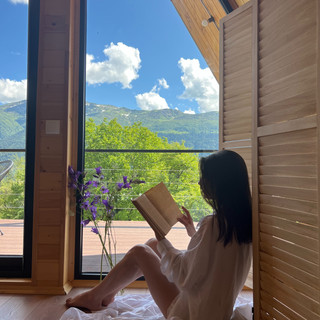
It’s choosing a book over a scroll.
It’s letting a beautiful moment just…be beautiful, without the interlude of photographing it.
It’s building a life with enough texture and depth that you don’t need a feed to fill the spaces.
It’s remembering that your mind, at rest, is not wasted.
It’s working.
That, to me, is the whole thing.
Not a rejection of the world - a return to the one you actually live in.
So Tell Me - What Are You Ready to Dissent From?
I’m genuinely curious about this one, because I think we all have a digital “should” that’s quietly exhausting us.
Maybe it’s the pressure to document the beautiful moments in your life rather than just living them.
Maybe it’s the guilt of not being “informed” by the non-stop news cycle.
Maybe it’s showing up on a platform that stopped feeling good a long time ago, but you’re not sure who you are if you leave it.
Whatever it is: you’re allowed to opt out.
You’re allowed to build something quieter.
You’re allowed to decide that your presence in your own life is more important than your presence online.
Drop it in the comments - the one thing you’re ready to gently, lovingly dissent from.
Let’s normalize opting out together.
I’ll start: I’m done feeling obligated to have a take on everything.
The world will survive my silence on most topics, and I will thrive in it.


Comments